Sandhill Cranes at Sunset
Jasper-Pulaski Fish and Wildlife Area
Medaryville, Indiana


 See more Skywatch here.
 Sandhill Cranes at SunsetSee more Skywatch here.
 Paired for Life
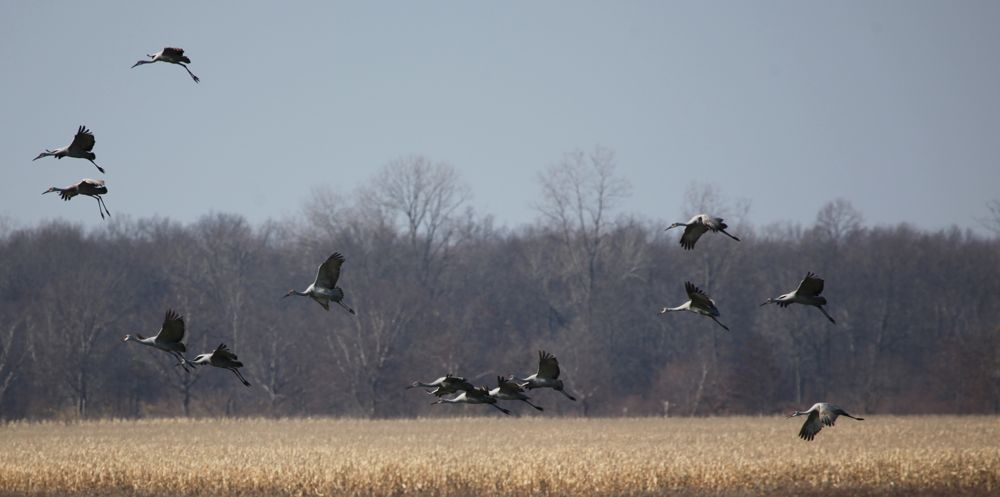
 Ritual of the Dance
 The Arrival of One Hundred

 Goose Pasture,
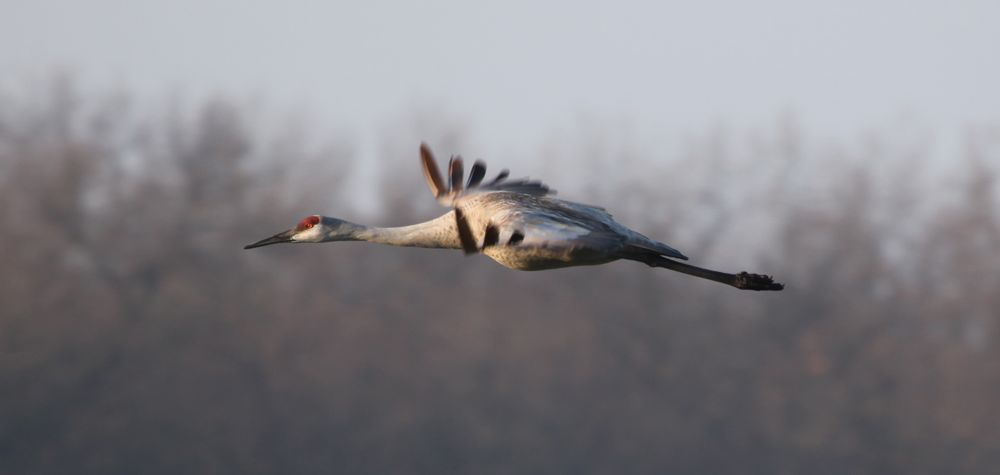 Greater Sandhill Crane, Grus canadensis, in flight
 Flying off to the fields to feed
 To Soar


 Caring for those lovely feathers

 "Whatcha find, a shrew?"
 Adult and juvenile cranes
 Two pairs dancing

 Sunrise
 Sandhill Cranes in predawn sky
 Goose Pasture
 return of the cranes at sunrise


 Greater Sandhill Crane, Grus canadensis
 We quickly pulled as far as we could to the side, wheels barely dipping off the paved highway, while heavily-loaded logging trucks pushed tall walls of air ahead of their massive profiles rocking the car, and I wrestled free of my seatbelt, scrambling for binoculars and camera.
The graceful birds stepping along the horizon, then crossing the crest of the hill to an unseen field beyond, barely visible against the gray sky where it met a well-worn pasture and several weathered barns could only have been the cranes.
Until then, an image seen only in others’ pictures—illustrations to stories told of their great flocks in migration, partners paired for life, dances of courtship seen only by those of the northern plains, the birds with the prehistoric past.
In an instant they were gone, and I was left holding a foggy lens, still missing that crisp, clear view so desired of the tall bird with the crimson forehead, the long, dark bill.
 Bracken Fern
 Seney NWR
 Large darner, Aeshna sp., eating smaller red dragonfly
 Pool along the Pineridge Nature Trail
 Trumpeter swan cygnet (L) and adult (R)
 Marshland Wildlife Drive
 Common Loon, juvenile
 Sandhill Cranes wading
 Gray's Creek
 Sandhill Cranes on a puddled plain


 Come along in Red Canoe as she explores the quiet backwater of Ohio's State Parks and the scenic streams and rivers of the Midwest. Discover the beauty hidden beyond the water's edge, quietly waiting, past access points, often only inches deep!





 Come browse my photography site, Nature Remains: nothing but a photograph, for full-page slide shows of my favorite images and opportunities to purchase them.


 In Spring of 2008, I began the study of 2 vernal pools on my property as part of the Ohio Vernal Pool Partnership monitoring program.
My 2008 journal includes the first photos and findings, as I studied this fascinating wetland area just a few steps beyond my backdoor...
In Spring of 2008, I began the study of 2 vernal pools on my property as part of the Ohio Vernal Pool Partnership monitoring program.
My 2008 journal includes the first photos and findings, as I studied this fascinating wetland area just a few steps beyond my backdoor...
 2009 photos and findings,
2010,... again!
Now, 4 years later, another season is just days away!
2009 photos and findings,
2010,... again!
Now, 4 years later, another season is just days away!
 Travel beyond the Midwest has taken me to some beautiful places. Usually off the beaten track, these places are WILD!
Acadia National Park
Travel beyond the Midwest has taken me to some beautiful places. Usually off the beaten track, these places are WILD!
Acadia National Park
 New River Nature Festival
 Olympic National Park
 Pictured Rocks and the UP
 Voyageurs National Park
 (click on the text above each photo for a quick get-away)
 A regularly appearing feature, "Have you seen..." takes a closer, more patient look at things usually not seen in a flattering light.
Take a look!
A regularly appearing feature, "Have you seen..." takes a closer, more patient look at things usually not seen in a flattering light.
Take a look!
 Each spring, as winter lessens its grip and days warm with the first fragrant breezes of a new season, we collect sap from our Sugar Maples and produce just enough syrup for ourselves for the coming year.
The progress of this year's backyard endeavor is illustrated here.
Each spring, as winter lessens its grip and days warm with the first fragrant breezes of a new season, we collect sap from our Sugar Maples and produce just enough syrup for ourselves for the coming year.
The progress of this year's backyard endeavor is illustrated here.
 Summer 2008, the tiny jewel of the avian world, a Ruby-throated Hummingbird, nested just feet from my front door. Pictures of her nest and the changing lives within are collected in this journal.
From life the size of a pea....
Summer 2008, the tiny jewel of the avian world, a Ruby-throated Hummingbird, nested just feet from my front door. Pictures of her nest and the changing lives within are collected in this journal.
From life the size of a pea....

 Cats that come to stay
 (click on the text above each photo for stories in these collections)




%20copy.jpg)