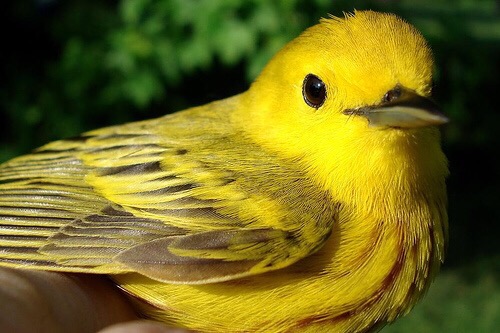
We celebrated the second Saturday in May, International Migratory Bird Day, with a bird walk at Cincinnati Nature Center, where 1000 acres of woods, streams, ponds and fields have come alive.
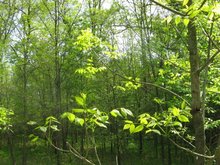
Leaving a bright, sunny cool morning behind, we walked a couple hours hours where the newly-leafed canopy already prevents much of the light from penetrating. With birdsong all around, we followed the trail, soft beneath our feet from 2-days' rain, weaving and winding into the deepest parts of Rowe Woods, already edged with dense growth. Patches of wild hyacinth, the faintest delicate blue, and spots of bright purple--a larkspur here and there, the only colors now. The wave of showy spring wildflowers has passed with little more than a leaf to tell of what had been.
Already the leaves hide them as their calls ring throughout these woods. And, aside from a swaying branch or a flash of wings as the birds dip through the understory, very few are seen.
An old beech, nothing more now than its silver trunk where woodpeckers have hammered, holds new treasure, though. At the very top, perfectly camouflaged in black and brown against the decaying wood, a large owlet--this spring's Great Horned, soon to fledge. Behind feathers the exact texture of his wood home, his dark features follow us as we pass.
In the fields, the blackberries and grasses are knee high. From every fencepost and treetop, a song rings out--everywhere, the activity is undeniable.
Migrants seen or heard this morning:
Acadian Flycatcher
Barn Swallow
Chimney Swift
Eastern Bluebird
Eastern Wood-Peewee
Great Crested Flycatcher
Indigo Bunting
Louisiana Waterthrush
Northern Parula
Scarlet Tanager
Wood Thrush







%20copy.jpg)